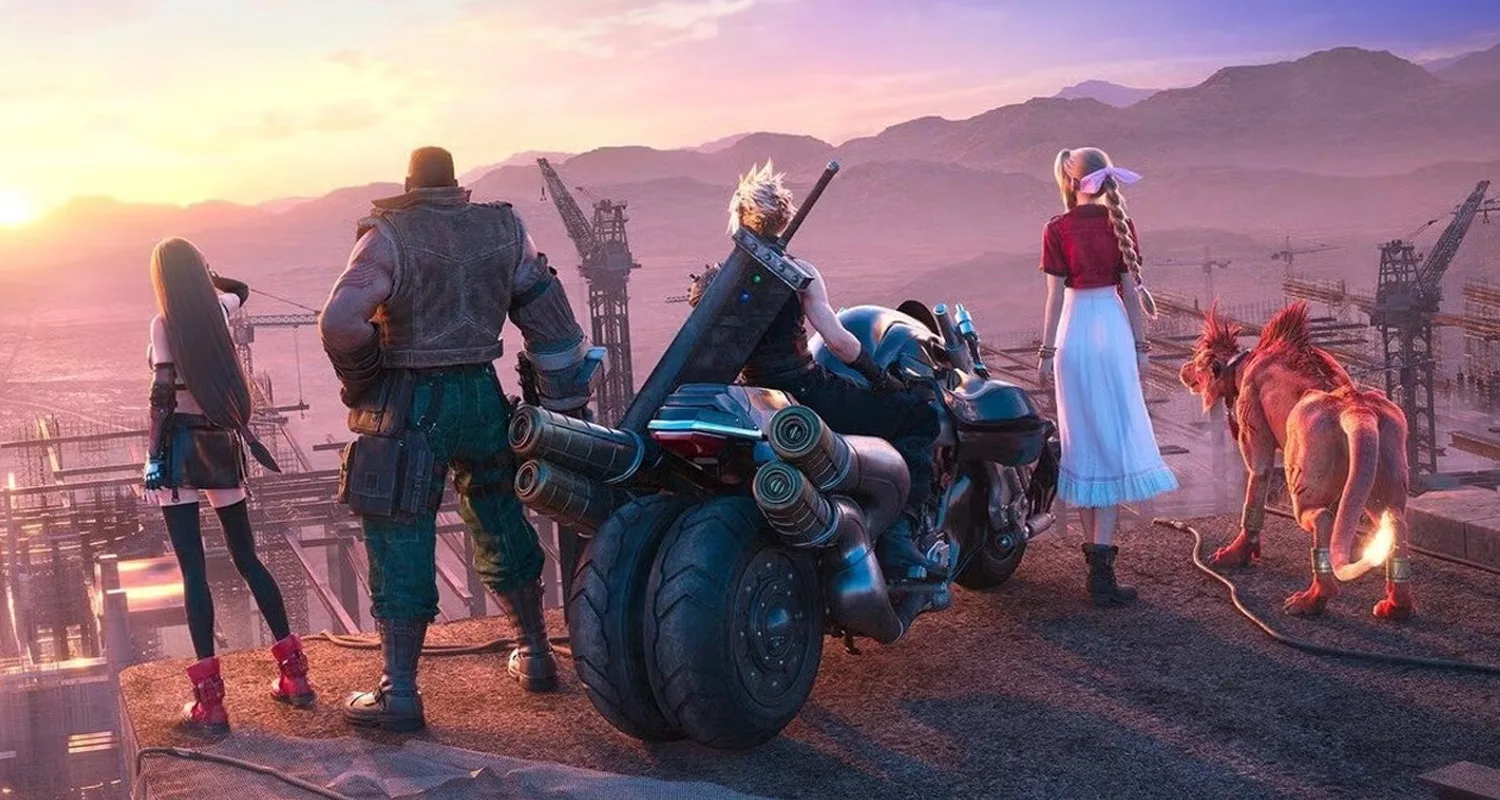

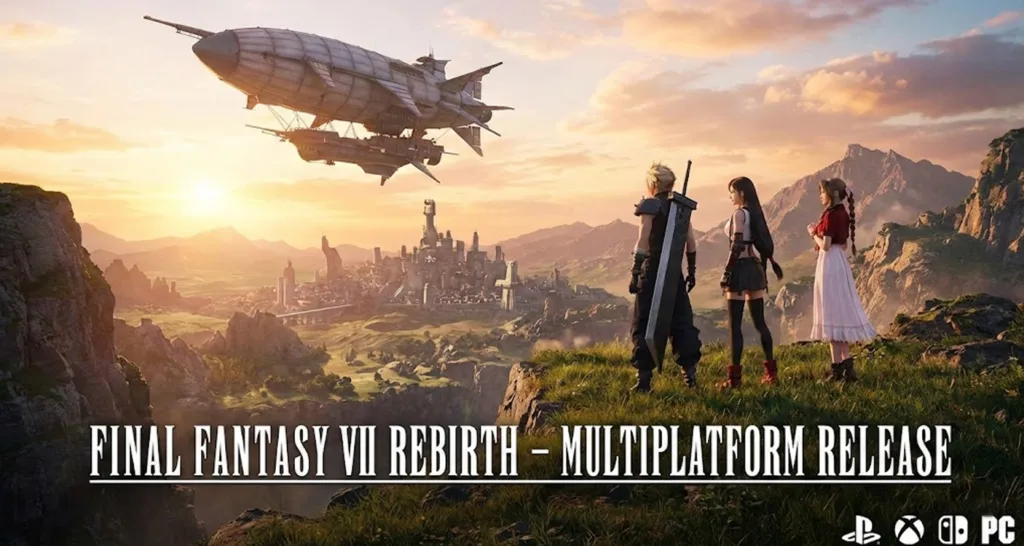
The days of console exclusivity are officially over for Cloud Strife. In a move that has electrified the RPG community, Square Enix has confirmed that Final Fantasy VII Rebirth is coming to Xbox Series X|S and the Nintendo Switch 2 on June 3, 2026.
Even more significantly, Director Naoki Hamaguchi has addressed the “elephant in the room” regarding multiplatform development: performance. Despite fears that porting a graphical powerhouse like Rebirth to the Switch 2 or Series S might hold back the game’s potential, the development team has promised that the experience will be delivered without sacrificing the game’s core quality.
Here is everything you need to know about the upcoming multiplatform launch and how Square Enix is achieving the impossible.
Final Fantasy VII Rebirth – The End of Exclusivity: Release Dates Confirmed
After launching as a timed exclusive on PlayStation 5 in early 2024 and hitting PC in January 2025, the second chapter of the remake trilogy is finally completing its journey to all major ecosystems.
- Xbox Series X|S Release Date: June 3, 2026
- Nintendo Switch 2 Release Date: June 3, 2026
This simultaneous release strategy for the remaining platforms signals a massive shift in Square Enix’s business model, moving away from aggressive exclusivity to ensure their flagship titles reach the widest possible audience.

The “No Sacrifice” Promise: How It Works
The biggest concern for fans – particularly those on high-end PCs and PS5 Pro – has been whether supporting lower-spec hardware like the Switch 2 would force developers to “dumb down” the game’s assets or level design.
Director Naoki Hamaguchi recently put those fears to rest in an interview discussing the multiplatform future of the trilogy. He clarified that the team’s new philosophy is “High-End First.”
1. PC as the “Lead” Platform
Going forward, including the development of Part 3, the team creates assets for the highest possible specifications (PC) first. This ensures that the game’s maximum potential – texture quality, polygon counts, and lighting—is realized without constraints.
2. Intelligent Scaling, Not Cutting
Instead of building a “lesser” game for consoles, the team uses scalable engines (Unreal Engine 4 customized) to tailor the output for specific hardware.
- For Switch 2: The game retains the full open-world seamlessness of the PS5 version. Rather than cutting content or adding loading screens, the game utilizes the Switch 2’s DLSS-capable hardware to reconstruct lower internal resolutions into a sharp image.
- For Xbox Series S: Optimization focuses on resolution scaling while locking framerates, ensuring the combat remains fluid—a non-negotiable for Rebirth’s action-heavy gameplay.
“Our decision to go multiplatform… will not in any way lower the quality,” Hamaguchi stated. “The experience remains intact across the board.”
Also read: New Leak Uncovers Exciting Details About Marvel Tokon: Fighting Souls
Platform-Specific Details
Nintendo Switch 2: A Massive Install
The Switch 2 version is a technical marvel, but it comes with a catch. Reports confirm the game will require a massive 102GB of storage space. While physical “Game Cards” will be available, they may require a download for the remainder of the data, a common practice for massive AAA titles on Nintendo hardware.
However, early hands-on reports suggest the Switch 2 version runs surprisingly well, targeting a locked 30fps with visual fidelity that rivals the PS4 Pro, thanks to Nintendo’s new hardware architecture.
Xbox Series X: Feature Parity
For Xbox owners, the wait has been long, but the reward is sweet. The Series X version will launch with feature parity to the PS5 version, including:
- Performance Mode (60fps)
- Graphics Mode (4k/30fps)
- Quick Resume support
What This Means for Remake Part 3
Perhaps the most exciting aspect of this news is what it implies for the finale of the trilogy. Square Enix has confirmed that Final Fantasy VII Rebirth Remake Part 3 is being built from the ground up as a multiplatform title.
Because the developers are no longer locked into a single ecosystem’s architecture, they are pushing the engine to its absolute limits on PC, knowing they can scale down for consoles later. This guarantees that Part 3 will visually surpass Rebirth, regardless of which platform you play on.
Conclusion
Square Enix has managed to thread the needle: expanding Final Fantasy VII Rebirth to millions of new players on Xbox and Nintendo without compromising the technical integrity that made the game a masterpiece. Whether you are playing on a high-end rig or a handheld Switch 2, the journey to the Forgotten Capital is about to be more accessible—and just as beautiful—as ever.
FAQ: Final Fantasy VII Rebirth Multiplatform
Q: Will the Switch 2 version have loading screens?
A: No. The developers have promised a seamless open-world experience identical to the PS5 version, though texture resolution will be lower.
Q: Is the Xbox version coming to Game Pass?
A: Currently, there is no announcement for Final Fantasy VII Rebirth arriving on Game Pass day one. It will be a full-price retail release on June 3, 2026.
Q: Will my save data transfer from PS5 to PC or Xbox?
A: Square Enix has not confirmed cross-save support between different ecosystem families (e.g., PlayStation to Xbox) at this time.